ByJohn A
Choosing Effective Respiratory Protection for Industrial Workplaces
Air quality is an important factor in workplace health and safety. In manufacturing facilities, construction sites, workshops, warehouses, and other industrial environments, workers may encounter airborne particles, dust, fumes, aerosols, or hazardous gases. Depending on the type and concentration of the contaminant, exposure can irritate the respiratory system or contribute to serious long-term health problems.
Respiratory protective equipment helps reduce exposure when it is selected and used correctly. However, not every mask protects against every airborne hazard. The appropriate choice depends on the contaminant, workplace conditions, exposure level, equipment design, and applicable safety requirements.
Employers need a structured approach to respiratory protection rather than relying on a general-purpose mask for every task. Understanding the different types of respirators, their limitations, and the importance of fit and maintenance can help organisations make more responsible purchasing decisions.
Understanding Respiratory Protective Equipment
Respiratory protective equipment is designed to reduce the amount of hazardous material a person inhales. Different designs address different hazards, so the product must match the exposure.
Particulate respirators are designed to filter airborne particles such as dust, certain aerosols, and other solid or liquid particles covered by their certification. Other respirator systems use suitable cartridges or canisters to address specified gases and vapours. Powered and supplied-air systems may be required for particular demanding environments.
These categories are not interchangeable. A particulate-filtering mask, for example, should not be assumed to protect against hazardous gases simply because it fits over the nose and mouth.
Before choosing a product, identify the contaminants present and consult the relevant safety data sheets, exposure assessments, and occupational safety requirements.
Why Proper Respirator Selection Matters
Reducing Exposure to Airborne Particles
Construction, cutting, sanding, grinding, and material handling can release airborne particles. Depending on their size and composition, these particles may enter the respiratory tract and cause irritation or other health effects.
A properly selected and fitted particulate respirator can reduce inhalation exposure when it is suitable for the contaminant and used within its approved conditions.
The level of protection depends on the respirator’s certification, fit, condition, and correct use. A product that is unsuitable for the specific hazard cannot be made effective simply by wearing it consistently.
See also: Improving Laboratory Efficiency with Compact Environmental Testing
Supporting Worker Health
Repeated exposure to certain workplace contaminants can contribute to respiratory illness. Appropriate respiratory protection can form part of a broader strategy for reducing these risks.
Employers should prioritise measures such as eliminating hazardous materials where possible, using less hazardous alternatives, enclosing processes, and installing effective ventilation. Respirators are generally used when additional protection is necessary after considering feasible control measures.
Improving Operational Consistency
A clearly defined respiratory protection programme helps workers understand which equipment is required for each task. Standardised procedures can reduce the risk of employees selecting unsuitable products or using equipment incorrectly.
Training should cover the intended application, limitations, fitting, inspection, storage, replacement, and reporting of damaged equipment.
Common Types of Respirator Masks
Disposable Particulate Respirators
Disposable respirators are designed for specified particle hazards and are discarded according to their instructions and workplace procedures. Their suitability depends on the filter classification, the contaminant, and the exposure conditions.
Some products are certified under recognised standards such as NIOSH requirements or applicable regional standards. Buyers should verify the actual certification and avoid assuming that visually similar products provide equivalent protection.
Disposable particulate respirators are not automatically suitable for oil-based aerosols, gases, vapours, or oxygen-deficient environments. Check the product’s stated limitations before use.
Reusable Half-Mask Respirators
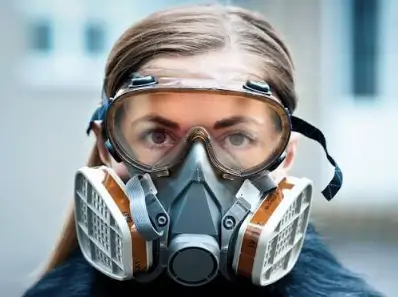
Reusable half-mask respirators typically cover the nose and mouth and use replaceable filters or cartridges. They can be suitable for certain workplace applications when the correct components are selected and the respirator fits the wearer.
The filter or cartridge must be matched to the hazard. Particulate filters and chemical cartridges serve different purposes, and one type cannot automatically replace the other.
Reusable systems also require cleaning, inspection, maintenance, and replacement of components according to the manufacturer’s instructions.
Full-Face Respirators
Full-face respirators cover the eyes as well as the nose and mouth. Depending on their design and approved configuration, they may provide respiratory protection and additional facial or eye protection.
Their use requires careful selection, fit assessment, and compatibility with other protective equipment. They are not universally suitable for every hazardous atmosphere.
Powered and Supplied-Air Systems
Some environments require powered air-purifying respirators or supplied-air systems. These products may be used for specific exposures where ordinary disposable or reusable respirators are unsuitable.
Selection requires a detailed hazard assessment and compliance with applicable regulations. Certain immediately dangerous or oxygen-deficient environments require specialised equipment and procedures beyond ordinary filtering respirators.
Factors to Consider When Selecting Safety Respirators
Identify the Contaminant
The first step is determining what is present in the air. Dust, fibres, welding fumes, biological aerosols, gases, and vapours have different properties and may require different protection.
Use workplace exposure assessments and safety data sheets to establish the hazard. If the contaminant or its concentration is unknown, do not assume that a general-purpose mask will provide adequate protection.
Verify the Required Certification
Check the applicable standard, filter classification, manufacturer identification, and documentation. The relevant requirements may differ by country, industry, and intended use.
Do not rely only on packaging claims or appearance. Counterfeit, mislabelled, or unsuitable products can create serious safety risks, particularly where the wearer depends on certified performance.
Evaluate Fit and Seal
A respirator must fit the individual wearer. Gaps around the face can allow contaminated air to bypass the filter, reducing the expected protection.
Where tight-fitting respirators are used, the applicable programme may require fit testing, medical evaluation, and user seal checks. Facial hair or other conditions that interfere with the sealing surface may prevent an effective fit.
Employers should follow the relevant occupational safety requirements and the manufacturer’s instructions.
Consider Comfort and Work Duration
Comfort can influence whether workers wear respiratory equipment correctly throughout a task. Factors such as weight, breathing resistance, temperature, communication needs, and compatibility with eyewear should be considered.
Comfort must not take priority over required protection. If a respirator is difficult to tolerate during a task, review the equipment choice and workplace conditions rather than removing protection in a hazardous area.
Review Environmental Conditions
Heat, humidity, moisture, dust loading, and chemical exposure can influence respirator performance and service life. The selected equipment must be approved for the intended environment.
For reusable respirators, check whether the materials and components can withstand the cleaning products and conditions specified for the workplace.
Correct Use, Inspection, and Maintenance
Check Equipment Before Use
Inspect the respirator for cracks, damaged straps, deformed sealing surfaces, clogged filters, or other signs of deterioration. Confirm that all components are compatible and properly assembled.
Disposable products should be checked for damage, contamination, and packaging integrity. Follow the manufacturer’s guidance for determining when a product must be discarded.
Follow Replacement Instructions
Filters and cartridges have different service-life considerations. Particle filters may become difficult to breathe through as they load with contaminants, while gas and vapour cartridges can become ineffective without an obvious visual warning.
Use the replacement schedule and indicators specified by the manufacturer and the applicable respiratory protection programme. Do not rely on smell as the sole method for determining cartridge replacement.
Maintain Reusable Equipment
Clean and disinfect reusable respirators according to the approved instructions. Store them in a clean, dry place protected from contamination, direct sunlight, and damaging conditions.
Keep replacement filters and cartridges in their original packaging until needed. Maintain records where required by the workplace’s equipment management procedures.
Train Workers Properly
Training should explain how to put on and remove the respirator, perform required checks, identify damage, and understand the limitations of the selected equipment.
Workers must also know when to leave an area if equipment fails, breathing becomes difficult, or unexpected exposure occurs. A respirator is not a substitute for emergency planning or appropriate hazard controls.
Choosing a Reliable Respirator Supplier
Purchasing teams should evaluate product suitability, certification, technical documentation, availability, and supplier support. Reliable information helps employers match equipment to the actual hazards instead of making decisions based on price or appearance alone.
When reviewing ppemax Safety Respirator Masks confirm the specific product’s intended hazards, applicable certification, filtration classification, fitting requirements, and replacement guidance. Verify that the product meets the needs of the workplace and complies with the relevant safety requirements.
For larger organisations, consistent product identification, dependable stock availability, and clear documentation can simplify purchasing and equipment management. Suppliers should also be able to clarify product limitations and provide the relevant technical information.
Cost should be considered alongside service life, fit requirements, training, maintenance, and the level of protection required. Choosing the least expensive mask without checking its suitability can create avoidable exposure risks.
Frequently Asked Questions
1. Can one respirator mask protect against every airborne hazard?
No. Different respirators are designed for different contaminants. The correct choice depends on the hazard, concentration, certification, fit, and environmental conditions.
2. Do safety respirator masks need to fit tightly?
Tight-fitting respirators need an effective seal to provide their intended protection. Fit testing and user seal checks may be required under the applicable respiratory protection programme.
3. When should a respirator filter or cartridge be replaced?
Replacement requirements depend on the product, contaminant, exposure conditions, and manufacturer instructions. Follow the established replacement schedule and any applicable service-life indicators.
Conclusion
Effective respiratory protection starts with identifying workplace hazards and selecting equipment designed for those specific exposures. Certification, fit, correct use, maintenance, and worker training all influence whether a respirator provides its intended protection.
Employers should combine suitable respirators with practical engineering controls and a documented safety programme. By reviewing product specifications and establishing consistent procedures, organisations can improve respiratory protection and support safer working conditions.