
ByJohn A
The Role of Familiar Environments in Student Learning Success
Educational psychology has long recognized that environment plays a significant role in how effectively information is absorbed and retained. Factors like noise level, lighting, social dynamics, and physical comfort all influence cognitive performance. Yet when parents consider tutoring options, environment is rarely the first criterion they think about. It deserves much more attention than it typically gets.
Why the Brain Works Better in Familiar Spaces
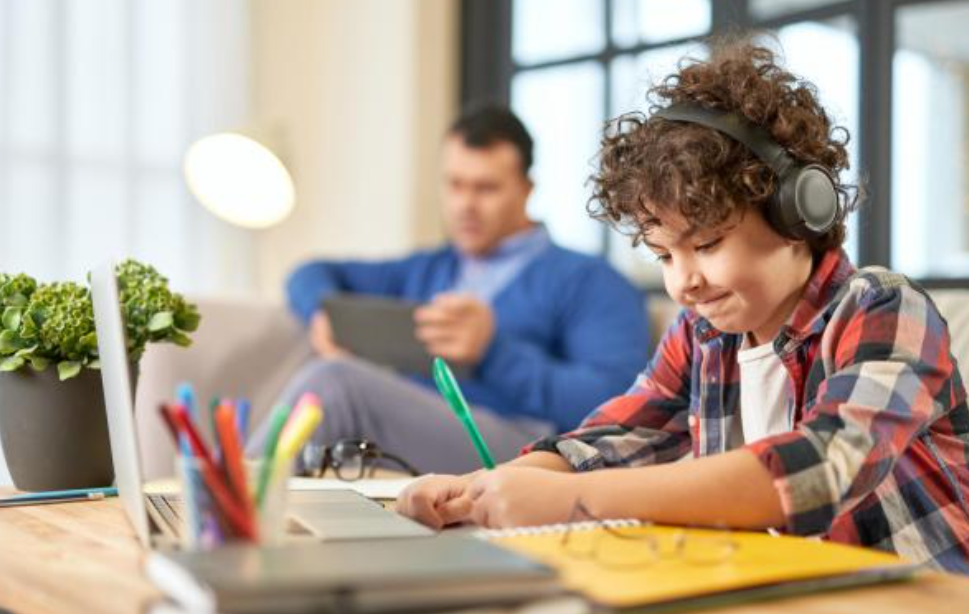
The benefits of at-home tutoring for students are partly rooted in fundamental neuroscience. When a child is in an unfamiliar or socially charged environment, a portion of their cognitive resources is devoted to processing that environment — monitoring social cues, managing low-level anxiety, and adapting to new stimuli. In contrast, a familiar home environment allows virtually all of the student’s mental energy to be directed toward the actual subject matter.
This is not a trivial difference. Studies on context-dependent learning suggest that information is encoded more deeply when it is learned in an environment where the learner feels relaxed and focused. Recall also tends to be stronger when the learning environment resembles the retrieval environment, which for many students means home or a school-like quiet space rather than a bustling learning center.
See also: How Artificial Intelligence Improves Supply Chains
Customizing the Learning Space for Each Child
At-home tutoring allows parents and tutors to deliberately design an optimal learning environment for each child. Some students concentrate best in complete silence. Others work better with gentle background music. Some need to pace or fidget while thinking; others focus best when seated with minimal visual distraction. At home, these individual needs can actually be accommodated.
A good at-home tutor will pay attention to these environmental factors and help parents make simple adjustments that improve session quality. Turning off the television, ensuring younger siblings are occupied elsewhere, and designating a consistent workspace all contribute to creating a learning-ready environment. Over time, the child begins to associate that space with focused work, and the transition into learning mode becomes faster and smoother.
Continuity Between Sessions and Homework Time
When tutoring happens at home, there is a natural continuity between the tutoring session and the student’s independent homework time. The tutor can observe how the student works at their regular homework spot, identify environmental factors that might be causing distraction, and make recommendations that improve the quality of study time beyond the tutoring session itself.
This holistic view of the student’s academic environment is something that a learning center tutor simply cannot access. The insight gained from seeing a child in their actual study space, using their actual materials, facing their actual daily distractions, allows for a level of targeted support that makes a real difference in day-to-day academic performance.
Creating Conditions for Genuine Learning
Ultimately, the most expensive curriculum, the most qualified tutor, and the most rigorous schedule will underperform their potential if the learning environment is wrong. Choosing at-home tutoring is partly a decision to optimize the environment in which learning happens — and that decision consistently pays dividends in both the depth of understanding students achieve and the speed at which they progress.
