ByJohn A
Precision Surface Treatment for Sensitive Industrial Components
Industrial cleaning often requires more than removing visible contamination. Manufacturers may need to prepare a surface while protecting the underlying material, maintaining dimensional accuracy, and avoiding unnecessary changes to the finish. These requirements are particularly important for components with detailed geometry, precision features, or surfaces that will undergo further processing.
Pulsed laser cleaning is one technology that can be assessed for selected surface-treatment applications. Its suitability depends on the contaminant, substrate, equipment configuration, and level of control required.
Understanding the Pulsed Cleaning Process
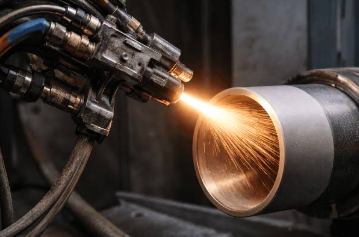
Pulsed laser systems deliver energy in discrete pulses rather than as a continuous output. The interaction between each pulse and the surface depends on the laser’s characteristics, the material, the contaminant, and the selected operating parameters.
Under suitable conditions, the process can remove selected surface deposits while limiting unwanted effects on the underlying substrate. However, the outcome is not determined by pulse delivery alone. Scanning speed, beam overlap, working distance, and the thickness of the contaminant also matter.
Manufacturers should establish whether the proposed process can achieve the required cleanliness and surface condition before introducing it into production.
Why Surface Control Matters
Industrial components vary in their tolerance for cleaning. A robust steel fixture may tolerate a different treatment approach from a thin metal part, coated component, or precision-machined surface.
Excessive energy can alter the substrate, while insufficient treatment may leave contamination behind. A controlled process must balance removal effectiveness with protection of the material.
Begin by identifying the surface material, contaminant type, and required finish. Establish clear acceptance criteria so that the cleaning result can be evaluated consistently.
Potential Uses in Manufacturing and Maintenance
Preparing parts before joining
Selected metal components require surface preparation before welding or another joining operation. A suitable cleaning process may help remove unwanted residues from the joining area.
The result should be assessed against the requirements of the joining procedure. Visual cleanliness alone may not confirm that the surface is ready for the next stage.
Cleaning components before inspection
Contamination can conceal cracks, corrosion, wear, and other surface defects. Appropriate cleaning may help inspection teams examine selected areas more clearly.
The cleaning process must not introduce damage or obscure features that are important to the inspection. Critical components may require a validated procedure and formal approval before treatment.
Refurbishing reusable metal parts
Some components can be cleaned and returned to service if their underlying condition remains acceptable. Pulsed laser treatment may be worth evaluating for selected contaminants, depending on the material and required finish.
Cleaning does not restore material lost through corrosion or correct structural damage. Inspection remains essential after the surface has been treated.
Evaluating Available Equipment
Businesses comparing pulsed systems can review the Clyertek pulse laser cleaning machine as a reference when researching equipment for selected precision-cleaning tasks.
The machine’s specifications should be checked against the actual application. Consider supported materials, output characteristics, scanning controls, cleaning area, operating distance, cooling requirements, accessories, and maintenance.
Ask the supplier to clarify the intended applications and operating limits. Where possible, arrange a demonstration using representative parts with the same material and type of contamination as the production workload.
Developing a Repeatable Cleaning Procedure
Consistency requires more than selecting a machine. Operators need a defined process that explains how to position the workpiece, select approved settings, move the beam, and inspect the finished surface.
Record relevant details, including material type, initial surface condition, treatment settings, processing time, and inspection outcome. This information helps establish repeatable results and makes troubleshooting more straightforward.
If a new material, coating, or component geometry is introduced, assess whether the existing procedure remains appropriate. Changes to the workpiece may require additional testing.
Comparing Pulsed and Continuous Laser Systems
Pulsed and continuous systems deliver laser energy differently. Pulsed systems may be considered where discrete energy delivery is advantageous, while continuous systems may suit applications that benefit from sustained output.
The preferred option depends on the substrate, contaminant, required cleaning effect, production rate, and acceptable surface changes. Neither approach should be selected solely because it is associated with precision or higher productivity.
A fair comparison should use the same type of workpiece and clearly defined acceptance criteria. Record treatment time, surface condition, repeatability, and any additional finishing or inspection required.
Safety and Workplace Preparation
Pulsed laser cleaning still involves significant laser hazards. Direct and reflected radiation can injure eyes or skin, while certain contaminants may produce airborne particles or fumes during treatment.
A documented risk assessment should determine the necessary enclosure, interlocks, warning indicators, access restrictions, suitable laser-rated eyewear, and local exhaust ventilation. Requirements depend on the equipment and the materials being processed.
Operators should be trained to follow the manufacturer’s instructions and approved operating procedures. Unknown coatings should be assessed before treatment, and protective systems must not be bypassed.
Measuring Quality and Efficiency
Before implementing the process at scale, establish a baseline using the existing cleaning method. Compare the new approach against measurable criteria, including cleaning time, labour, surface quality, rework, consumables, and downstream performance.
For components prepared for coating or joining, assess whether the cleaning result meets the next process’s requirements. For components undergoing maintenance, verify that the treated part remains fit for service.
Include installation, training, maintenance, safety infrastructure, and extraction in the cost evaluation.
Frequently Asked Questions
1. What is the main characteristic of pulsed laser cleaning?
It delivers energy in separate pulses. The resulting cleaning performance depends on the equipment, material, contaminant, and operating settings.
2. Is pulsed cleaning safe for delicate surfaces?
Not automatically. Surface sensitivity, material properties, and process parameters determine suitability. Testing on representative samples is essential.
3. How can a business verify cleaning results?
Define acceptance criteria, inspect the treated surface, document the operating conditions, and perform additional tests where required by the next production stage.
Conclusion
Precision surface preparation requires a balance between effective contaminant removal and protection of the underlying material. Pulsed laser technology may be suitable for selected industrial applications, but the result must be validated for each relevant surface and contaminant. With careful equipment selection, documented procedures, appropriate inspection, and effective safety controls, manufacturers can determine whether pulsed laser cleaning supports their quality and maintenance objectives.